

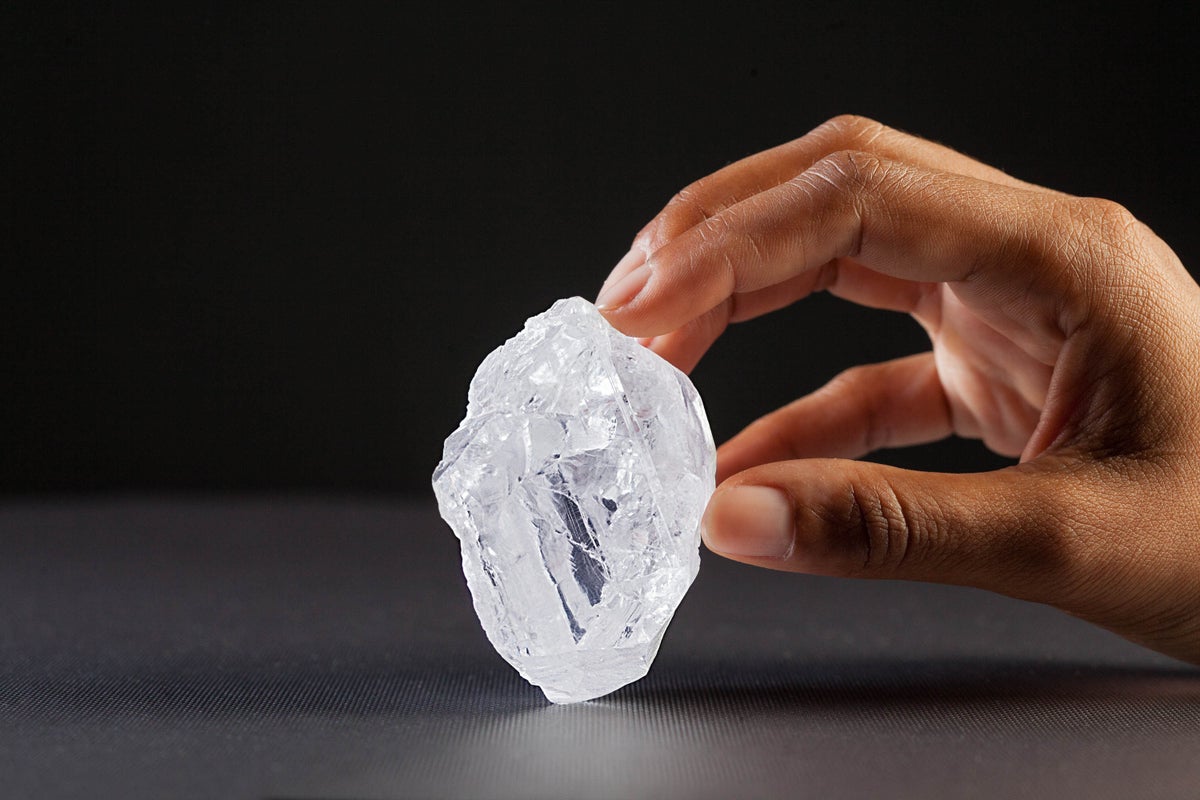
A few of the most extraordinary gems ever discovered belong to a uncommon class of diamonds generally known as CLIPPIRs (Cullinan-like, Massive, Inclusion-Poor, Pure, Irregular, Resorbed).
They make up lower than 1% of all diamonds on Earth, and embody three of the biggest diamonds ever recovered, the Cullinan, at 3,106 carats, discovered on the Premier mine in South Africa; the 1,111 ct Lesedi La Rona, found on the Karowe mine in Botswana in 2015 and bought for US$53 million in 2017; and the two,492 ct Motswedi recovered from the Karowe mine in 2024.
CLIPPIRs will not be atypical diamonds. They’re a part of a bunch generally known as “superdeep” diamonds that type greater than 400km beneath our toes in a area of Earth’s deep inside referred to as the mantle transition zone.
That is a lot deeper than atypical gem-quality diamonds, which normally type within the thick, inflexible mantle roots beneath previous continents, at depths of as much as about 200km. The mantle is the thick layer of scorching rock between Earth’s core and outer “shell” generally known as the crust.
Though their dimension and worth entice consideration, our curiosity in CLIPPIR diamonds lies within the journey they report. As a result of they originate at depths far past our attain, diamonds are helpful for understanding components of Earth’s inside that we can’t immediately observe. CLIPPIRs are particularly uncommon messengers from the deep mantle. Learning them is without doubt one of the few methods we are able to learn the way rocks and carbon are recycled within the Earth’s deep inside, and the way our planet reshapes itself over a whole bunch of tens of millions of years.
As a geologist on the College of Cape City, I specialise within the magmas that carry diamonds to the floor, generally known as kimberlites. My colleagues and I got down to examine what the world’s largest diamonds might inform us about Earth’s hidden recycling system – particularly, what rocks hosted these uncommon diamonds, and the way they have been ultimately dropped at the floor.
We explored these questions by specializing in olivine, a mineral present in kimberlite rocks. Kimberlites are uncommon magmatic rocks that rise quickly from deep inside the Earth, appearing like pure elevators that carry diamonds and different minerals from the mantle to the floor.
Olivine is essentially the most considerable mineral within the mantle. As kimberlite magmas rise, they decide up olivine from the mantle rocks they move by way of. The chemistry of this olivine provides us a fingerprint of these deep rocks, together with clues about their iron content material and oxygen isotope signatures. This helps us perceive the mantle areas that kimberlites sampled, together with the areas the place diamonds might have been saved earlier than being dropped at the floor.
Geoffrey Howarth is an affiliate professor at College of Cape City. This text was first printed by The Dialog and is republished below a Artistic Commons licence. Learn the authentic article .
However CLIPPIR diamonds have been present in solely a small variety of kimberlites globally, and we nonetheless don’t totally perceive why some kimberlites comprise these distinctive diamonds whereas most don’t.
Our findings add new items of the puzzle. We recognized uncommon iron-rich domains within the mantle related to the kimberlites that comprise CLIPPIR diamonds. This offers us new clues in regards to the rocks that hosted these diamonds earlier than they have been carried to the floor. Our findings additionally provide a sensible software for diamond exploration as a result of kimberlites containing considerable iron-rich olivine and associated minerals have increased potential to host CLIPPIR diamonds.
Journey by way of the deep Earth
Earlier research had proven that CLIPPIR diamonds fashioned far deeper than atypical diamonds. Their chemistry additionally instructed a hyperlink to historical seafloor rock, generally known as oceanic crust, that was dragged deep into the Earth by plate tectonics – the sluggish motion and interplay of sections of Earth’s inflexible outer shell.
When two plates meet, one will be pressured beneath the opposite. This course of, referred to as subduction, carries oceanic crust deep into the mantle, the place it’s modified by warmth, strain and interplay with the encircling rocks. Below these excessive situations, carbon contained on this materials will be reworked into diamond.
New proof from our evaluation of olivine chemistry means that CLIPPIR-bearing kimberlites are linked to a selected type of recycled materials: historical basaltic oceanic crust that had been altered by scorching fluids circulating by way of the seafloor earlier than it was dragged deep into the Earth. This hydrothermally altered oceanic crust seems to have fashioned dense, iron-rich rocks within the deep mantle.
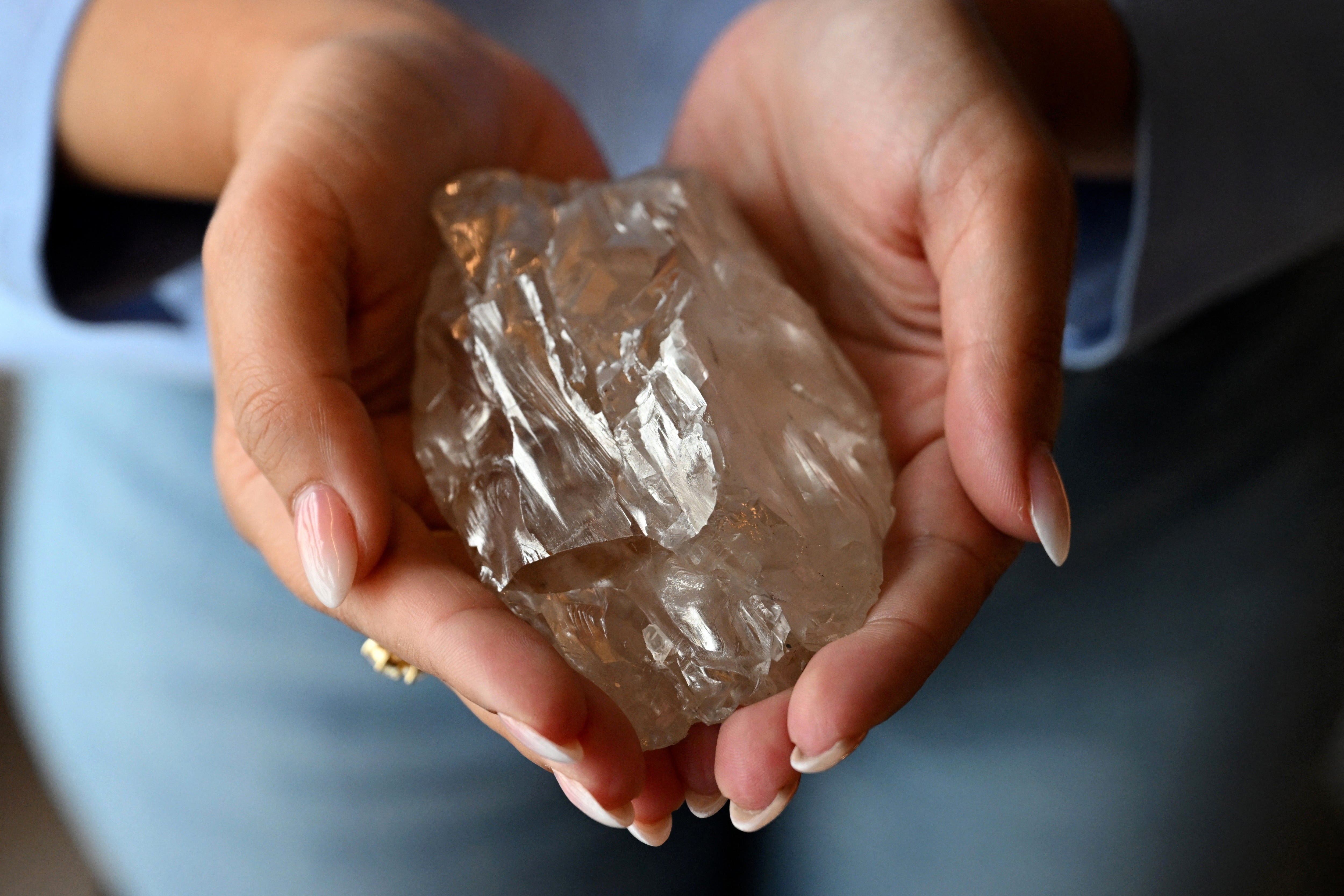
This discovering addresses one of many unresolved questions on CLIPPIR diamonds: what sort of rocks hosted them earlier than kimberlite magmas carried them to the floor?
However our findings additionally elevate one other query. These iron-rich rocks are so dense that they can not rise again in the direction of Earth’s floor on their very own. Earlier theories instructed that the rock internet hosting these diamonds might float upwards passively by way of the mantle. Our outcomes counsel that the journey was in all probability extra sophisticated.
As a substitute of rising passively, this dense, iron-rich materials would have wanted a strong raise. One attainable mechanism is mantle plumes: columns of superheated rock that rise from deep inside the Earth and might seize dense materials, forcing it upward. These upwellings might have carried the diamond-bearing materials upwards till it grew to become saved on the base of the lithosphere, the thick, inflexible root beneath previous continents, the place it probably remained for a whole bunch of tens of millions of years.
A lot later, uncommon magmas generated deep inside the Earth handed by way of these diamond-bearing areas. These magmas rose quickly to the floor and solidified as kimberlite rocks, carrying the diamonds and related minerals with them.
In different phrases, CLIPPIR diamonds will not be solely uncommon and helpful gems. They report an extended geological journey: from historical seafloor, to deep mantle, to the roots of continents, and at last to the floor in uncommon volcanic eruptions.
Discovering extra CLIPPIR diamonds
Our findings might also assist information diamond exploration.
In components of Africa, together with Sierra Leone and Angola, very massive CLIPPIR diamonds have been present in river gravels. These diamonds will need to have come from major supply rocks, corresponding to kimberlites, however in lots of circumstances these sources stay unknown. Rivers can transport diamonds removed from the place they initially erupted, making it troublesome to hint them again to the rocks that introduced them to the floor.
The well-known Star of Sierra Leone, for instance, was a 969-carat diamond recovered in 1972 from river deposits within the Kono district. But a long time of mining within the area didn’t clearly establish a kimberlite supply for diamonds of this sort. Extra just lately, CLIPPIR diamonds have been recovered from the Meya kimberlite in the identical district, displaying that major sources for these distinctive diamonds do exist there.
Our strategy provides exploration groups a brand new clue to search for. Kimberlites containing considerable iron-rich olivine and associated minerals have increased potential to host CLIPPIR diamonds. This doesn’t assure that enormous diamonds shall be discovered, however it helps geologists determine which kimberlites are value investigating in additional element.
Based mostly on our findings, we’d count on essentially the most promising kimberlites in areas corresponding to Sierra Leone and Angola to be those who present this iron-rich chemical signature. There are nonetheless many poorly characterised kimberlites in these areas, and a few could also be hiding extra of the world’s rarest diamonds.
The world’s largest diamonds have travelled by way of Earth for a whole bunch of tens of millions of years. By studying the chemical clues preserved within the rocks that introduced them to the floor, we’re starting to grasp not solely the place these diamonds could also be discovered, however what they reveal in regards to the deep processes that form our planet.