

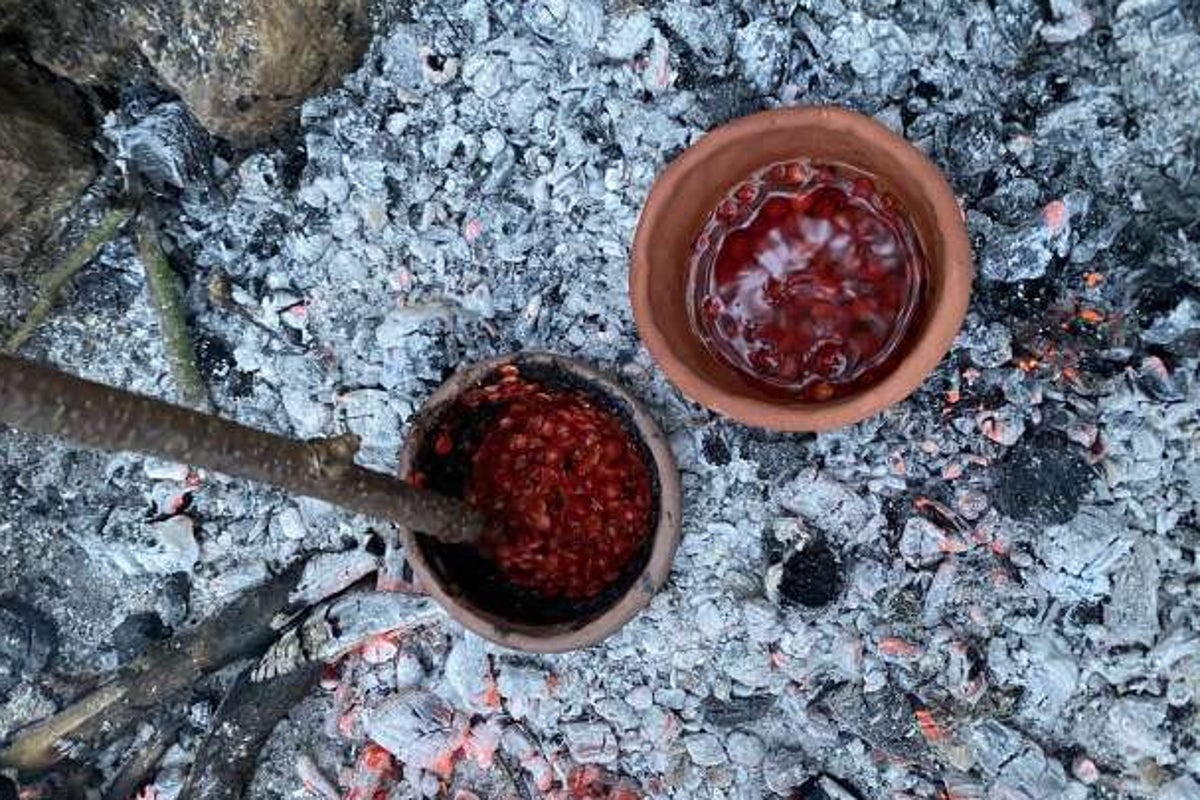
Millennia-old pottery stays from throughout Europe reveal that historic communities within the area made elaborate meals utilizing a a lot higher number of plant and animal merchandise than beforehand believed, in accordance with a brand new examine.
Archaeologists interpret diets of historic cultures by analysing fatty residues in pottery stays. However this technique largely solely gives insights into meat-based meals.
The brand new examine mixed a number of methods, together with microscopic examination and chemical evaluation, to determine the stays of vegetation eaten by historic European hunter-gatherers.
It examined natural residues left behind on almost 60 pottery shards discovered throughout 13 archaeological websites in northern and jap Europe, courting to between the sixth and third millennium BC.
Utilizing this multipronged method, researchers recovered tissue samples of quite a lot of vegetation, together with grasses, berries, leaves, and seeds, alongside residues of fish and different seafood.
“We discovered that hunter-gatherer fishers weren’t residing on fish alone, they had been actively processing and consuming all kinds of vegetation,” they wrote within the examine printed within the journal PLOS One.
The combination of residues and elements diversified from area to area, possible a mirrored image of the sorts of assets domestically obtainable in addition to native cultural practices.
As an example, within the Baltic area, Viburnum berries had been continuously discovered within the pottery foodcrusts with a excessive focus of freshwater fish, “implying a focused collection of elements”, the examine famous. “Microscopic evaluation revealed the next frequency of freshwater fish in pottery from the Lithuanian websites in distinction with a extra diversified vary of animal merchandise recognized by lipid residue evaluation from the positioning of Syltholm II in southern Denmark.”
The findings counsel that vegetation and aquatic meals performed a key position within the diets of early Europeans.
Several types of pottery had been used for meals preparation, and every tradition had their very own complicated culinary traditions.
Particularly, archaeologists discovered that there was a basic tendency amongst prehistoric European hunter-gatherers in direction of combining “particular meals into distinct preparations”.
Citing an instance, they mentioned Viburnum berries typically gave the impression to be the “sole plant ingredient combined with freshwater fish”.
“This analysis underscores that to actually perceive historic diets, we have to take a better take a look at these meals crusts, fairly actually,” they wrote.
“Whereas standard chemical evaluation tends to spotlight the animal-based elements of historic meals, our mixed microscopic method has introduced these prehistoric recipes again into focus.”