

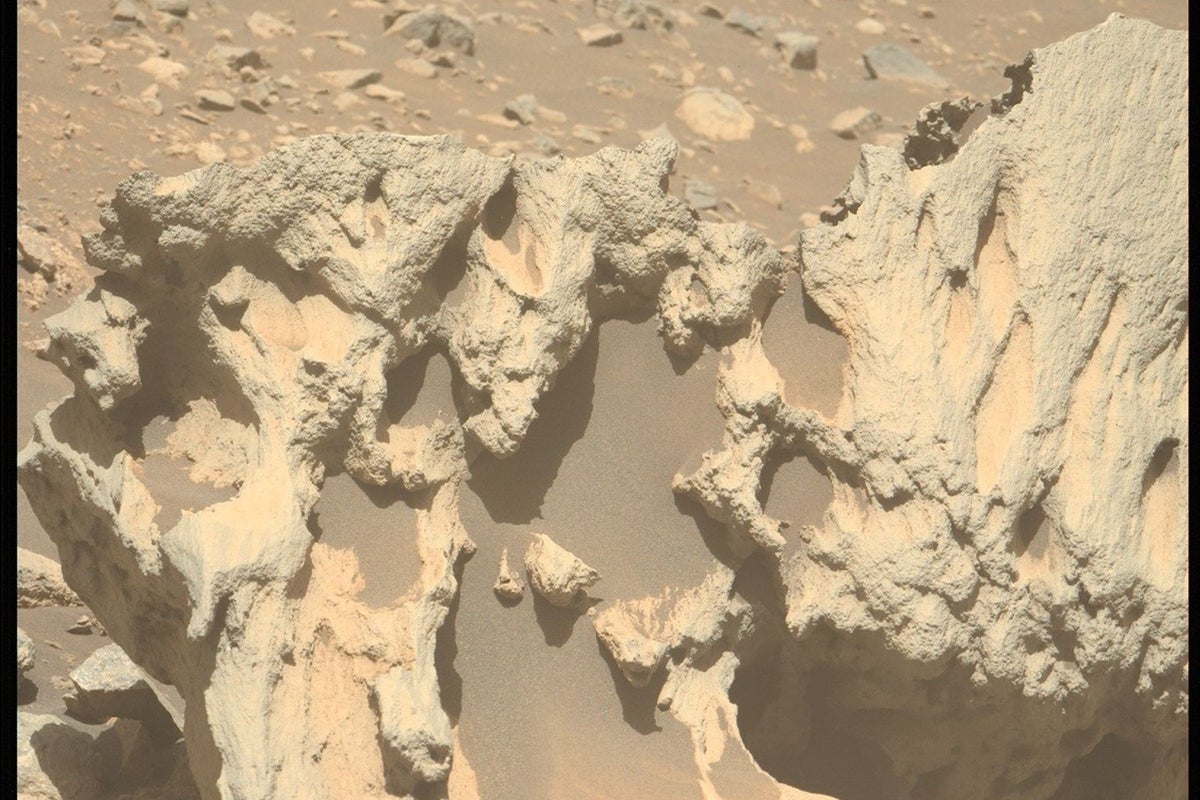
NASA’s Perseverance Mars rover has made one other unusual discovery.
Whereas investigating the Vernodden space of Jezero Crater – the crater the place the rover first landed on the Crimson Planet in February 2021 – it discovered an unusually formed rock that’s not meant to be on the floor of Mars.
The place it could have come from is anybody’s guess, however the “unusually formed rock” – presumably a meteorite – has components sometimes related to iron-nickel meteorites fashioned within the core of enormous asteroids, the company’s Jet Propulsion Laboratory mentioned in a weblog publish.
Nickel-iron alloy can also be a main part of the Earth’s core.
The rock, has a diameter of about 31 inches, has been named “Phippsaksla,” and was recognized as a goal for the rover due to its high-standing look.
It actually stood out among the many decrease mendacity, fragmented rocks within the space.
The rover was in a position to analyze its make up utilizing the SuperCam instrument, which examines rocks and soils utilizing a digital camera, laser and spectrometers that measure properties of sunshine.
The SuperCam and “Percy” – the rover – are additionally on the lookout for chemical supplies that may very well be associated to previous life on Mars.
Earlier this 12 months, Performing NASA Administrator Sean Duffy and scientists mentioned they’d discovered the clearest indicators of life on Mars to this point in Jezero Crater.
A pattern Perseverance had collected from an historic dry riverbed accommodates potential biosignatures.
“To the most effective of our present information, a few of the chemistry that formed these rocks required both excessive temperatures or life, and we don’t see proof of excessive temperatures right here,” Texas A&M College geologist Dr. Michael Tice mentioned in September.
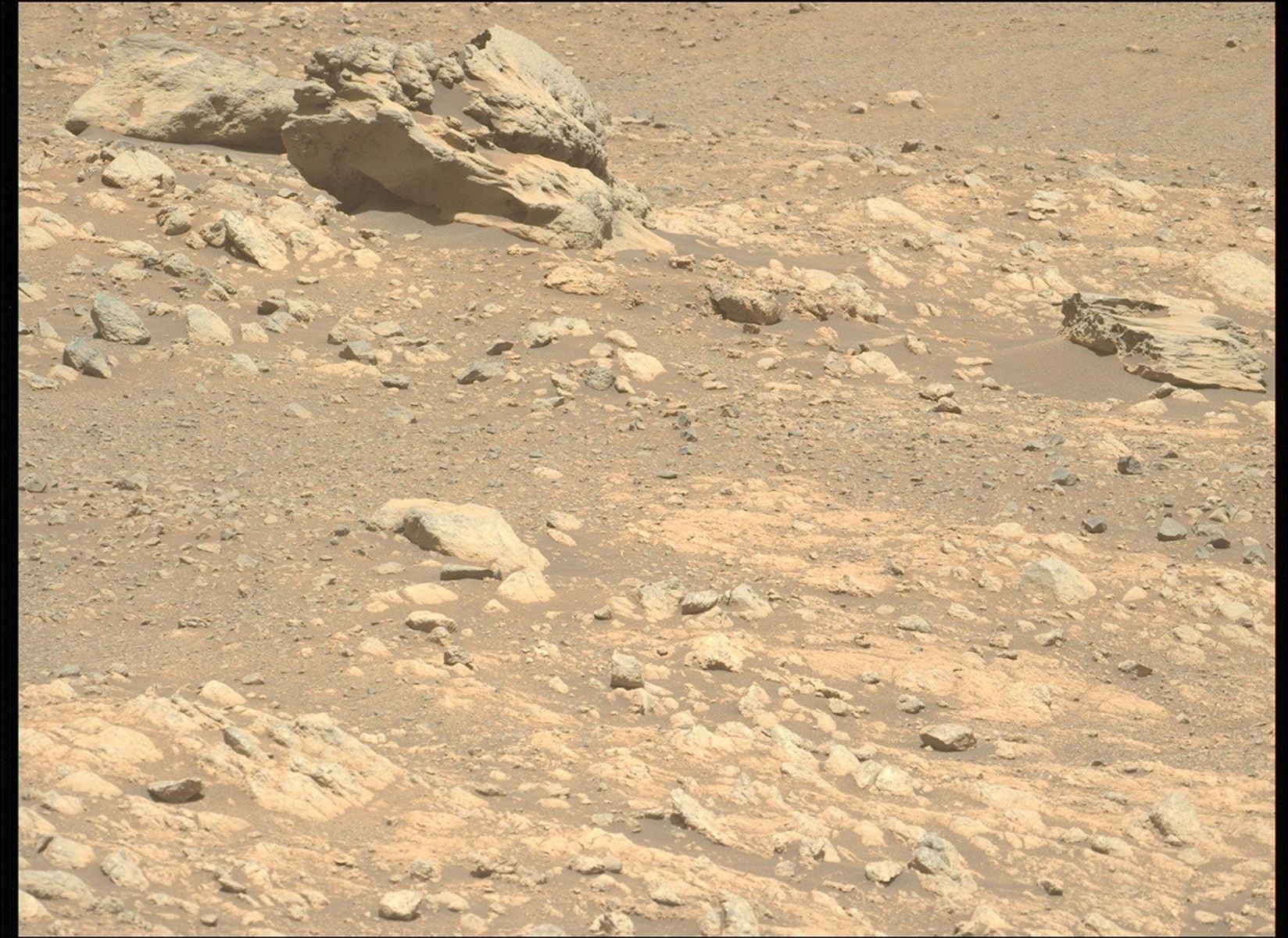
Throughout their very own missions, previous Mars rovers, together with Curiosity, Alternative and Spirit additionally discovered iron-nickel meteorites, together with the “Lebanon” meteorite found in 2014 and the “Cacao” meteorite noticed in 2023.
These have been present in Gale Crater, which lies roughly 2,300 miles away close to the Crimson Planet’s equator.
“As such, it has been considerably surprising that Perseverance had not seen iron-nickel meteorites inside Jezero Crater, significantly given its comparable age to Gale crater and variety of smaller influence craters suggesting that meteorites did fall on the crater ground, delta and crater rim all through time,” NASA mentioned.
Extra work must be finished to verify Perseverance has lastly discovered one.
“But when this rock is deemed to be a meteorite, Perseverance can in the end add itself to the checklist of Mars rovers who’ve investigated the fragments of rocky guests to Mars,” NASA mentioned.