

Archaeologists discovered a bone whistle utilized by historic Egyptian guards to warn of grave robbers, shedding gentle on how royal tombs had been protected.
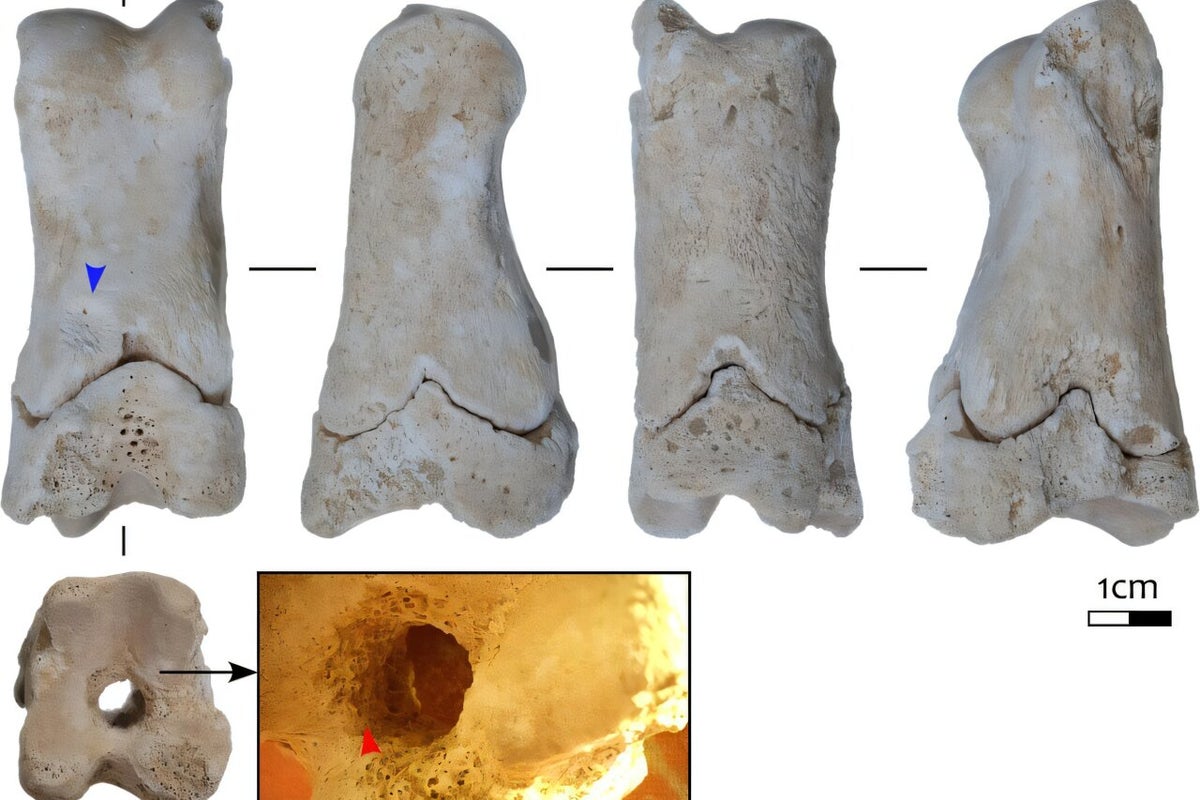
The whistle created from a cow’s toe bone was recovered from an archaeological website of the 18th Dynasty metropolis of Akhenaten in Center Egypt, relationship from 1350-1330BC.
Though excavations on the website have been underway because the Nineteen Seventies, current digs have uncovered two remoted settlements of the dynasty.
The settlements probably housed the stonecutters and labourers who constructed the rock-cut tombs of the close by royal cemetery.
These areas and their connecting roadway circuits seem to have been policed closely.
In one among these roadways, archaeologists discovered what would possibly as soon as have been a storage constructing or a spot for the guards to sleep.
Right here, they recovered an historic perforated cow toe bone.
“This object matches with concepts that this neighborhood was closely policed due to their proximity to the royal cemetery and certain connection to work on the royal tombs,” researchers stated.
Whereas historic cultures the world over made use of cow bones to create ornaments and cube for various board video games, the one discovered on the guard constructing didn’t appear to suit into any of those classes.
An experimental recreation of the artefact revealed the bone would possibly function a whistle, able to producing a loud screeching tone that may very well be heard a protracted distance away.
Researchers suspect the whistle might have been used to sign or warn different guards. It additionally provides to the understanding of the “soundscape” of historic Egypt, scientists stated.
Whereas earlier analysis on the tombs, work, and different historic works has revealed varied musical devices popularly used through the time, this may very well be the primary discovering of a whistle from the time.
“Considerably, this object is the primary of its sort recognized in a dynastic context and demonstrates the potential insights that wait to be gained from intensive examination of Egypt’s osseous applied sciences,” researchers wrote.
Nevertheless, the precise use of the toe bone artefact stays unclear as most historic texts from Egypt are concerning the lives of royals and elites, with the on a regular basis lives of widespread people understudied and underpublished.
“Regardless of over 200 years of intensive educational curiosity in Pharaonic Egypt, little focus has been given to understanding the manufacturing, use, and variety of the osseous materials tradition created by this enigmatic tradition,” researchers wrote.