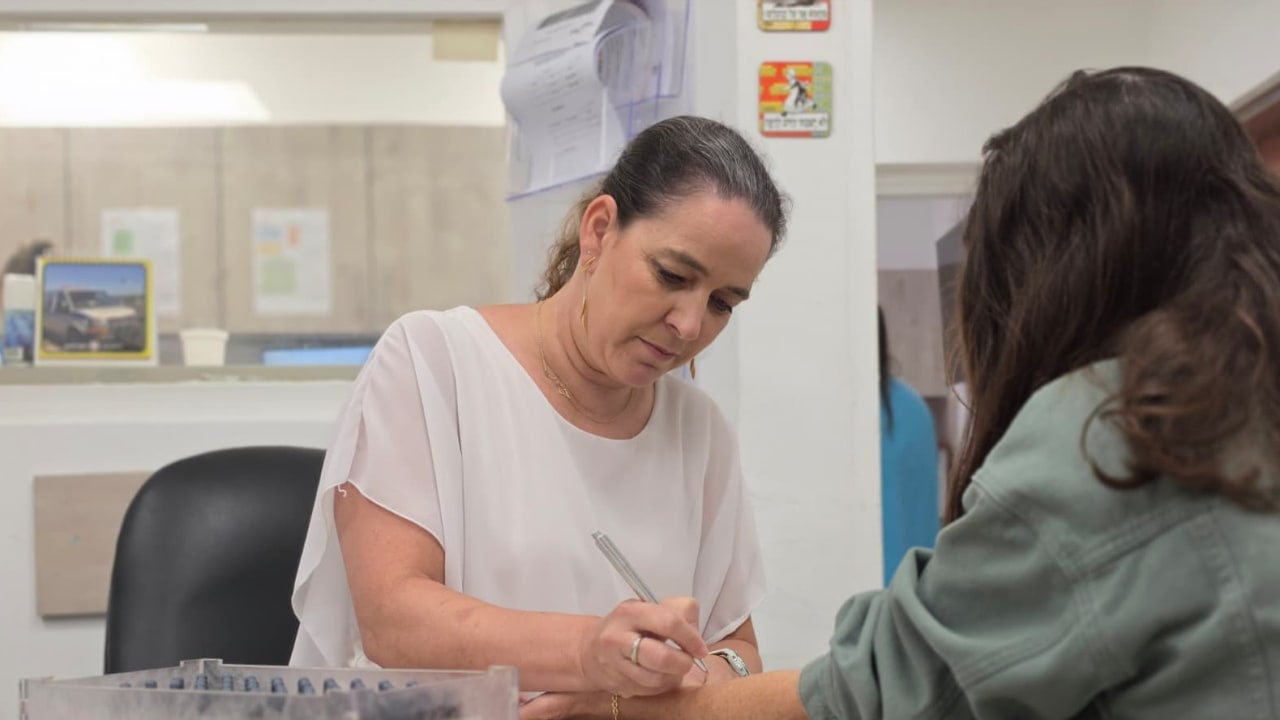


Translating groundbreaking educational analysis into tangible, real-world purposes is a persistent problem for universities worldwide. Whereas scientific journals and conferences function important platforms for disseminating information amongst friends, bridging the hole between the laboratory and {the marketplace} typically requires just a little one thing additional.
The story of X-trodes, a startup for wearable know-how developed by Tel Aviv College (TAU) professor Yael Hanein, is a compelling success story. It exemplifies how choose initiatives with excessive potential for applicability might be superior whereas nonetheless in a campus lab. The Zimin Institute at TAU offered essential early help to check the feasibility of the know-how, serving to facilitate the transition from foundational engineering towards a real-world product.
X-trodes provides wi-fi, versatile sensors on the pores and skin that dramatically simplify the gathering of electrophysiological knowledge. The preliminary analysis was pushed by a transparent aim: to maneuver past cumbersome, wired electrode methods and create a user-friendly resolution for capturing delicate electrophysiological alerts. This imaginative and prescient shortly expanded to allow high-quality, dependable measurements from people who’re freely transferring, with out compromising the integrity of the information. Furthermore, what started as a tutorial inquiry has blossomed right into a commercially out there know-how now utilized in analysis labs throughout the globe.
One of many best strengths of X-trodes is the flexibility of the know-how, evident in its various makes use of. Early breakthroughs included facial muscle mapping, opening avenues for exploring emotional evaluation with excessive precision – a useful software for psychology, neuroscience, and enhancing human-computer interplay.
Maybe probably the most impactful developments is within the discipline of sleep analysis. By changing restrictive lab tools with snug, wi-fi sensors, X-trodes permits for correct sleep research to be performed in a participant’s own residence. This shift makes analysis extra accessible, cost-effective, and offers knowledge extra consultant of pure sleep patterns, essential for advancing the analysis and therapy of sleep issues.
X-trodes is proving to be a robust software in psychological and physiological evaluation. Its high-resolution sign acquisition, mixed with AI-driven analytics, affords deeper insights into cognitive and emotional states, benefiting scientific psychology, sports activities science, and human efficiency monitoring. The know-how can be pushing boundaries in high-resolution muscle mapping, providing new prospects for rehabilitation protocols, significantly for sufferers recovering from neurological or musculoskeletal accidents.
Trying forward, X-trodes holds immense promise for the way forward for human-machine interplay (HMI). Its capability to seize exact, real-time electrophysiological alerts is significant for growing extra intuitive brain-computer interfaces, superior prosthetics, and immersive digital actuality experiences.
In the end, X-trodes is greater than only a product; it represents a brand new period in wearable biosensing. By making high-quality, real-world electrophysiological monitoring extra accessible, scalable, and impactful, the pioneering work of Prof. Hanein and her colleagues is reshaping the way forward for how we perceive and work together with the human physique.
Since its founding 6 years in the past, TAU’s Zimin Institute for Engineering Options Advancing Higher Lives – a part of a worldwide community of Zimin Institutes – has supported a complete of 30 various initiatives throughout numerous schools, together with engineering, life sciences, and medication. Examples of different high-potential funded initiatives at TAU embody the 3D printing of cardiac patches with built-in electronics, detection of most cancers cells utilizing AI, and the event of a multimodal brain-computer interface.
This text was written in cooperation with Tel Aviv College.
!function(f,b,e,v,n,t,s)
{if(f.fbq)return;n=f.fbq=function(){n.callMethod?
n.callMethod.apply(n,arguments):n.queue.push(arguments)};
if(!f._fbq)f._fbq=n;n.push=n;n.loaded=!0;n.version=’2.0′;
n.queue=[];t=b.createElement(e);t.async=!0;
t.src=v;s=b.getElementsByTagName(e)[0];
s.parentNode.insertBefore(t,s)}(window, document,’script’,
‘https://connect.facebook.net/en_US/fbevents.js’);
fbq(‘init’, ‘1730128020581377’);
fbq(‘track’, ‘PageView’);