
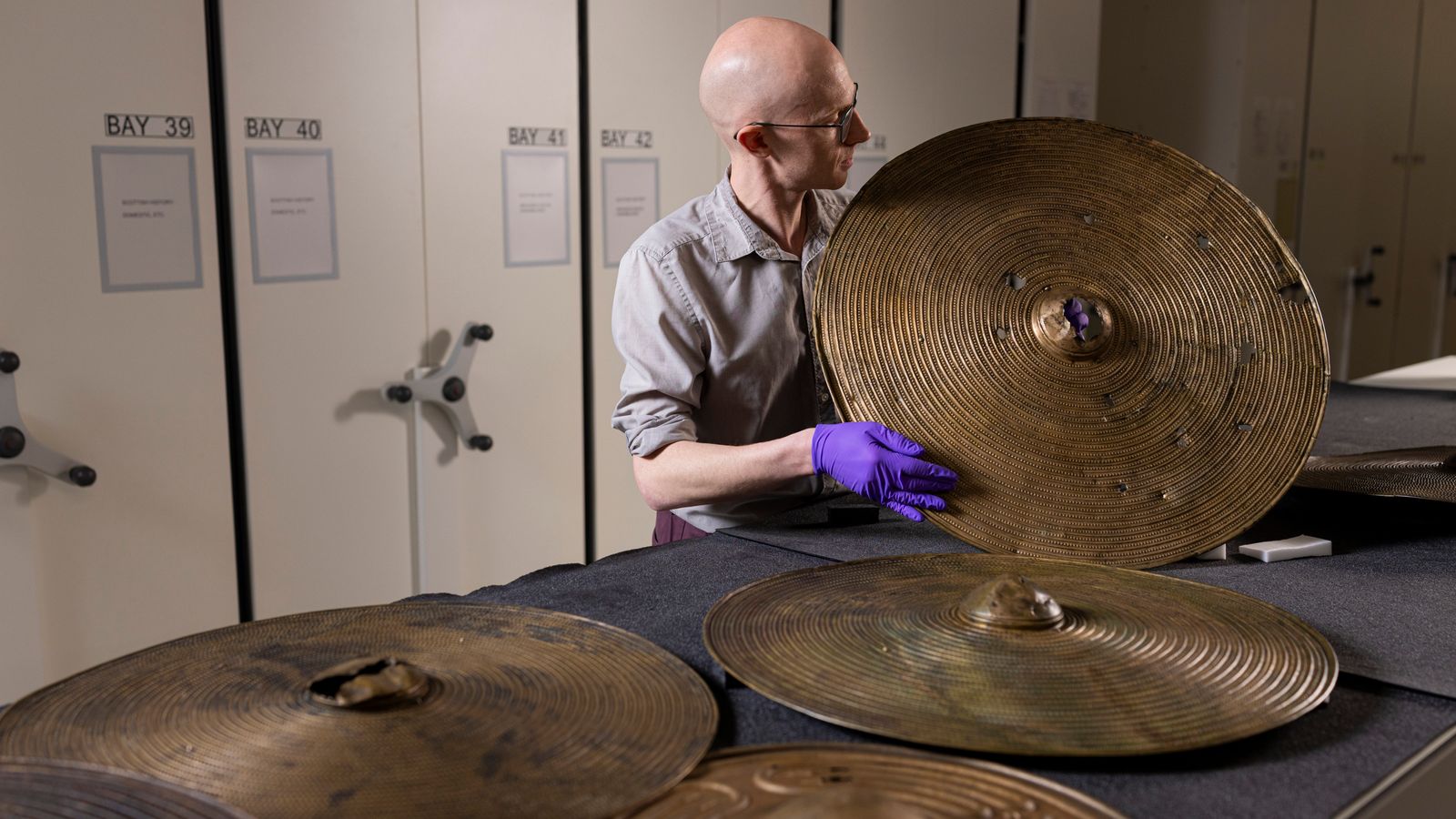
A Bronze Age defend has returned to Scotland for the primary time in additional than 230 years.
The defend was found throughout labouring work close to Beith in North Ayrshire round 1779, and in 1791 was introduced to the Society of Antiquaries of London the place it remained ever since.
It has now been introduced again north of the border on mortgage for the primary time forward of the Scotland’s First Warriors exhibition, which opens on the Nationwide Museum of Scotland (NMS) in Edinburgh this summer time.
Forward of the present it was introduced along with 5 different shields, found within the Borders and Aberdeenshire within the nineteenth century, that are a part of the NMS assortment.
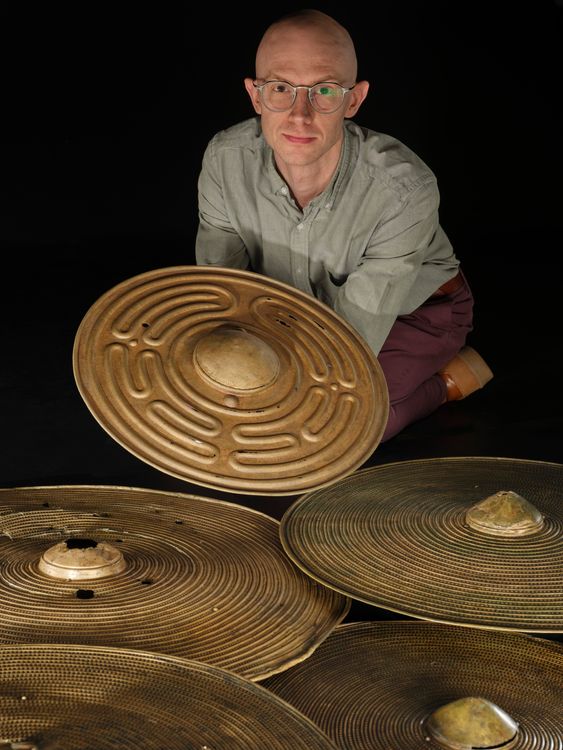
4 of the shields, together with the one from Beith, will characteristic within the exhibit – however bringing the six collectively beforehand has given specialists the chance to check the craftsmanship of the objects, which date from 3,300 to three,500 years in the past.
Dr Matthew Knight, senior curator of prehistory at NMS, mentioned: “The second the sixth defend arrived again in Scotland and was unpacked on the Nationwide Museums Assortment Centre was breathtaking.
“The Beith defend is such a spectacular, intricate object and because of the generosity of the Society of Antiquaries of London, that is the primary time it has been seen in Scotland since its discovery over 200 years in the past.
“Bronze shields from this era are distinctive to Britain and by bringing all six of those extremely uncommon shields collectively, we will acquire a deeper understanding of life and battle in Bronze Age Scotland and past.
“It truly is a once-in-a-lifetime alternative.”
Pic: NMS/PA
In accordance with historic stories, the defend was found with 5 – 6 others buried upright in a circle within the peat.
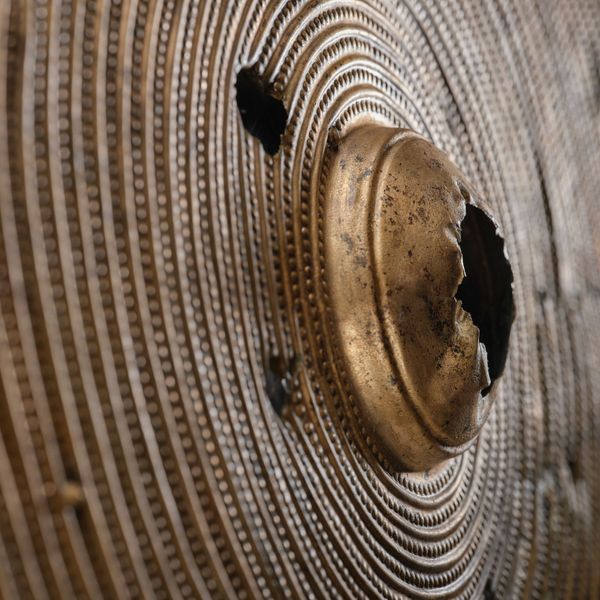
Measuring round 60-70cm in diameter, the defend is embellished with hammered bosses and ribs, and has spear injury – indicating it was utilized in fight.
It’s not recognized why the group of shields was buried on this means.
Dr Knight mentioned of the Beith defend: “We all know that as a result of they’re so arduous to make they usually’re fairly uncommon objects, whoever owned it was in all probability somebody of fairly excessive standing, or they might have been fairly particular.
“When you concentrate on the concept it was one among 5 – 6 that have been buried in a bathroom, it makes you suppose that there should have been this group of high-status individuals who got here collectively to bury their shields collectively.
“We are able to solely speculate about what that kind of ceremony may need been like, or what the which means behind it might have been, the place possibly this was a bunch of communities who have been giving up their defensive objects.
“Maybe it was an indication of peace.”
Pic: NMS/PA
Dr Knight mentioned a lot of the shields look very comparable, probably suggesting they have been made by the identical craftsperson or workshop.
Picket or leather-based shields have been extra frequent on the time and it’s believed the uncommon bronze ones have been used not just for defence but additionally symbolised the standing of the soldiers they belonged to.
Learn extra from Sky Information:
‘Fascinating’ private library of ‘forgotten scholar’ rediscovered
Scotland’s final shoemaking store ‘frozen in time’ to be restored
Scotland’s First Warriors exhibition will discover 1000’s of years of historical past, from the Neolithic (late Stone Age) to the approaching of the Romans.
It is going to additionally characteristic internationally vital archaeological discoveries from throughout the nation, such because the Carnoustie Hoard, which features a uncommon spearhead embellished with gold and a bronze sword in a wood scabbard, relationship from round 1120-920 BC.
The exhibition opens on 27 June and can run till 17 Might 2027.